Ghost Circle Window Card: An Embroidery Designer’s Review
As a designer who constantly bridges the gap between digital cutting files and needle-and-thread execution, I approach every new asset with a specific question: How will this actually translate when stitched out on fabric? The Ghost Circle Window Card is marketed primarily as a 3D SVG cutting template for paper crafts, but its potential for mixed-media embroidery projects is significant. At approximately 4-1/2 x 4-1/2 inches, this design offers a substantial canvas that demands careful consideration regarding stitch density, fabric choice, and structural integrity. Before you load this file into your machine or list a finished product in your Etsy shop, it is vital to understand how this geometric window concept performs in a real-world embroidery environment.
First Impressions and Structural Viability
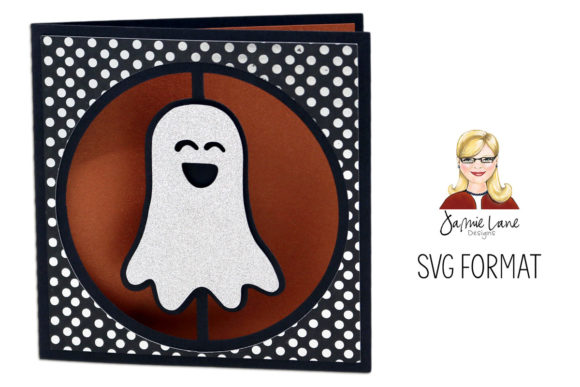
My initial assessment of the Ghost Circle Window Card focuses on its clean lines and balanced negative space. The circular cut-out framed by the ghost motif creates a natural focal point that is ideal for framing an embroidered center. Unlike complex, dense illustrations that can distort lightweight fabrics, this design relies on shape and silhouette. For an embroidery designer, this is a relief. It suggests that the applique design potential here is high, provided you treat the "window" not just as empty space, but as a deliberate frame for your needlework.
The mood is playful yet structured, avoiding the chaotic detail that often plagues holiday embroidery. This makes it versatile enough for both children’s items and sophisticated adult decor. However, because the original file is a cutting template, you must verify if a dedicated embroidery file version exists or if you are digitizing the SVG yourself. If digitizing, the 4-1/2 inch size is generous; ensure your hoop size accommodates this dimension plus adequate margin for stabilizer grip without distorting the circle’s perfect geometry.
Real-World Application: The Custom Sweatshirt Test
To truly evaluate this asset, I mentally prototyped it for a current client request: a unisex Halloween sweatshirt for a boutique merchandise line. Sweatshirts are notoriously tricky due to their stretch and fleece backing. Using the Ghost Circle Window Card as a chest placement, I envisioned the ghost outline created with a crisp satin stitch border, while the interior circle featured a contrasting textured fill stitch or a personalized monogram.
In this scenario, the design serves as more than just decoration; it acts as a branding element. The circular window allows for modular customization. For example, a small business owner could keep the ghost outline consistent across fifty garments but change the center fill stitch color or text for different departments or family names. This modularity increases the perceived value of the custom apparel. Customers appreciate when a handmade product feels bespoke rather than mass-produced. The clean edges of the Ghost Circle Window Card ensure that even after washing, the design retains its professional appearance, which is critical for maintaining customer trust and encouraging repeat sales.
Navigating Fabric Limitations and Stabilization
While the design is robust, it is not immune to technical pitfalls. When working with this specific 3D SVG conversion, you must be hyper-aware of fabric texture and weight. A 4-1/2 inch design covers significant surface area. On thin fabrics like quilting cotton or baby onesies, the contrast between the dense satin borders and the open center can cause tunneling or puckering if the stabilizer is insufficient. I strongly recommend using a medium-weight cut-away stabilizer for knits and a tear-away for stable wovens when executing this design.
Be particularly cautious with dark fabrics. The Ghost Circle Window Card relies on contrast to define the "window." If stitching white thread on black fleece, ensure your thread colors have enough opacity. You may need to add an underlay running stitch to prevent the dark fabric from showing through lighter threads. Conversely, on highly textured fabrics like terry cloth towels or minky blankets, the fine details of the ghost’s expression might get lost. In these cases, simplify the inner details or increase the column width of the satin stitches to ensure the design reads clearly from a distance.
Commercial Value and Presentation Strategy
For Etsy sellers and creative entrepreneurs, the visual appeal of this design directly impacts click-through rates. The symmetrical nature of the Ghost Circle Window Card makes it exceptionally photogenic for product photography. When creating a printable mockup or listing photo, the centered composition draws the eye immediately. This is crucial for digital product previews where buyers need to instantly understand the scale and style.
Furthermore, this design bridges the gap between personal gifting and commercial inventory. As a personalized gift, it feels thoughtful and custom. As a small shop product, it is efficient to produce because the stitch path is logical and minimizes trims. However, always confirm licensing. Just because a file is sold as a 3D SVG does not automatically grant rights to sell the digitized digital embroidery file or the finished embroidered goods. Verify that your purchase includes commercial usage rights for commercial embroidery before integrating it into your business assets.
Essential Designer Notes for Success
Before committing this design to a final embroidery project, adhere to these practical checkpoints to ensure professional results:
- Test Stitch Out: Never skip this step. Stitch the Ghost Circle Window Card on scrap fabric identical to your final project to check registration and tension.
- Verify Dimensions: Confirm the design fits your specific hoop. While listed as 4-1/2 x 4-1/2, resizing can alter stitch density. Avoid scaling beyond 10-15% without re-digitizing.
- Check Contrast: View your thread palette in natural light. Ensure the ghost outline pops against both the fabric and the center fill.
- Stabilizer Selection: Match stabilizer weight to fabric drape. Heavy stabilizer on light fabric causes stiffness; light stabilizer on heavy fabric causes distortion.
- Detail Inspection: Zoom in on the embroidery software preview. Ensure no gaps exist between the satin border and the fill areas, especially at the curve intersections.
- Mockup Validation: Create black and white mockups to test value contrast independent of color. If it looks muddy in grayscale, adjust your thread choices.
- Licensing Audit: Document your commercial rights. Keep receipts and license terms accessible in case of platform audits on Etsy or Shopify.
The Ghost Circle Window Card is a deceptively simple asset that rewards preparation. By respecting its structural needs and leveraging its modular potential, you can transform a basic cutting template into a standout piece of holiday embroidery. Whether you are crafting a unique tote bag design, a nursery keepsake, or a seasonal bestseller, success lies in treating the digital file as a starting point for textile artistry, not just a preset instruction. Approach it with the eye of a maker, and your finished products will reflect that intentionality.